Blog

  • A Strikeout Epidemic

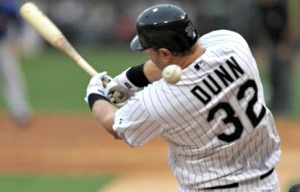
    First baseman Adam Dunn

    It has been 15 years since I played competitive, organized baseball.  Although I never played above the high school level, I think I can accurately say that many things in the sport have changed over those 15 years.  One of those things is the perception and proliferation of strikeouts, both from a hitter’s and a pitcher’s point of view.  Aside from losing, there was nothing I hated more as a baseball player than finishing an at bat with a strikeout.  I would try my best to make sure that didn’t happen (often unsuccessfully).  I would shorten my swing with two strikes, choke up on the bat, and generally do whatever I could to put the ball in play.

    I believe a majority of professional hitters used to have a similar approach.  But I seriously doubt this is still the case.  The numbers would certainly indicate otherwise.  Today, Major League hitters are striking out at record breaking rates.  So far in 2013, teams are averaging 7.63 strike outs per game.  This is well ahead of last year’s all time high of 7.50.  Just five years ago, that number was 6.34 and a decade ago it was 5.80.  That is a pretty incredible increase in whiffs in just a ten year period.  And it’s having a major impact on the game.  Scoring is down to just 4.25 runs per team, per game.  That is the lowest rate since 1992.  The significant increase in drug testing is the most cited reason for the drop in offense in recent years, and I think that is a completely valid reason.  But the inability of hitters to put the ball in play is a major factor as well.

    So let’s figure out why this is happening.  Are pitchers just better than they were ten years ago?  Do they throw nastier offspeed pitchers that are tougher to hit?  Are teams more willing to promote and play guys who sacrifice contact for power?  Or, in general, do today’s hitters step up to the plate with significantly different approaches to hitting than the players from previous generations?  In my opinion, the answer to those questions are yes, yes, yes and yes.  The end result is less scoring and a whole lot more whiffing.

    During the Moneyball era of about a decade ago, the emerging philosophy to hitting was to take more walks.  Do whatever it takes to get on base.  Working a count in an attempt to walk naturally leads to more strikeouts as well.  There has always been a place in baseball for guys who strike out a ton, but hit for power and also receive more than their share of walks.  But what’s really interesting about the recent surge in strikeouts is that there has been no increase in walks at all.  In fact, last season’s 3.03 walks per team, per game was the lowest rate since 1968!  So the Moneyball era is clearly over.  What we have now is something entirely different.  It’s a pitching dominated league in which hitters struggle to reach base and strike out a ton.  And I hate it!

    This season, only one team has a worse offensive K/BB rate than my very own White Sox.  But since the Astros are fielding an AAA roster, I’ll put them aside and focus on the Sox instead.  They are the perfect example of what is wrong with today’s general approach to hitting.  Sure, they have plenty of guys who can hit home runs.  They have the 4th highest HR ratio in the league.  Yet only the Marlins and Dodgers score fewer runs per game.  This is because the Sox strike out at the third highest rate (an alarming 23.7% of their plate appearances end in strikeouts), yet find themselves as the least walked team in all of baseball!  Home runs are great.  I would much rather have guys who hit them than guys who don’t.  But if you field a lineup full of players who don’t take walks and constantly strike out, you are going to struggle to score and will lose a lot of games.  That is exactly what is happening to the Sox this year.  Their leadoff hitter, Alejandro De Aza, has 42 strike outs (tied with teammate Adam Dunn for 9th in MLB).  Their #2 hitter, Jeff Keppinger, has not taken a walk this season in 117 plate appearances.  His laughably pathetic .188 OBP is somehow lower than his batting average.  After looking at the numbers from De Aza and Keppinger, it is no wonder why the Sox struggle to score.  They never have anybody on base when the heart of the order comes up.  The White Sox are hardly alone in their poor plate discipline numbers, but they are the best example of the current trend in the game.

    As a quick aside, have I ever mentioned how much I love Baseball-Reference and FanGraphs?  Easily my two favorite web sites.  All of the numbers I am quoting in this article came from one or the other.  Which leads me to my next topic.  FanGraphs has advanced stats in a category called “Plate Discipline”.  Here is a FG page displaying league-wide plate discipline stats for the past ten years.  These stats show how often players swing at, and make contact with, pitches inside and outside the strike zone.  For the most part, there haven’t been dramatic changes in these stats over this ten year period, except in three key categories:  O-Swing% (percentage of pitches a batter swings at outside the strike zone), O-Contact% (percentage of pitches a batter makes contact with outside the strike zone when swinging the bat) and Zone% (overall percentage of pitches a batter sees inside the strike zone).  The O-Swing% and O-Contact% numbers have been creeping up, despite the overall swing and contact percentages remaining relatively steady.  This means hitters are swinging at far more pitches outside of the zone than they used to.  And they are seeing fewer strikes as a result (Zone% number has been trending downward).  So hitters are swinging at more bad pitches, allowing pitchers to throw fewer strikes yet walk about the same, if not fewer hitters.

    To me, these numbers scream out that there is a problem with plate discipline in baseball right now.  I’m not discounting the possibility that pitchers are simply getting better and are harder to hit.  In fact, I am almost certain that is the case.  But if I were a MLB general manager, I would definitely start looking for hitters who are more disciplined at the plate.  It might be time to go back to the Moneyball approach, with a twist.  It is fine to have a few hackers in the lineup, but you better find some players who will take a walk too.  And it isn’t the worst thing in the world to employ hitters who are  head and shoulders above their peers in terms of putting the ball in play, particularly if they bring other skills to the table like speed, elite defense, or maybe even decent power.

    I think there has been less of a change in how pitchers are viewed.  Strikeout pitchers have almost always been preferred over pitch-to-contact guys in the eyes of scouts and baseball execs.  Pitchers have a difficult time advancing through a system if they don’t produce impressive strikeout ratios.  This is nothing new.  But there has definitely been a decrease in the number of successful pitch-to-contact pitchers in the big leagues.  I saw one such pitcher in person just last night.  Nationals young lefty Ross Detwiler is a rare breed in today’s game.  He is a hard throwing lefty who just doesn’t strike out many hitters, but is still a very effective pitcher.  But I would have a hard time naming more than a couple other similar type of pitchers.

    I’d like to delve into the pitching side of things to a much greater extent some other time.  For now, I’m concluding that poor plate discipline and the willingness of teams to play guys who struggle to hit a baseball are leading factors in why we are seeing more strikeouts than ever before.  As one who despises strikeouts from a hitting perspective, I can only hope this trend will stop sometime soon.

    By the way, I had been planning on writing about this topic for a few weeks now, but happened to read a great article by CBS’s Scott Miller on this very thing just a few days ago.  I highly recommend his article which is obviously much more professional and thorough than mine.  You should check it out too.
  • A Little Deja Vu

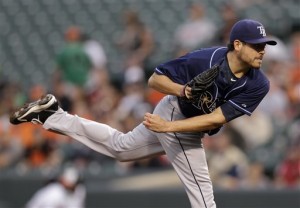
    Darkhorses pitcher Matt Moore

    Surprised by the Darkhorses quick start? Don’t think it can possibly last? Well, if history tells us anything about the Darkhorses, it’s that they bounce back rather quickly from rock bottom. 2012 was the third time in franchise history that the Darkhorses finished in last place. After finishing at the bottom in 2003, the Darkhorses jumped up to a third place finish in 2004, which at the time was their highest finish by a wide margin. Three years later, they made the ultimate jump in winning their first DTBL title (by 12 points) a year after finishing dead last. That kick-started four straight championship seasons. If the first three weeks of this season are any indication, the Darkhorses appear to be in the process of another remarkable turnaround.

    Nobody wins a championship in April, but getting off to a good start is very important, and is especially rewarding for a team coming out of the abyss. Pretty much anything that could have gone wrong for the Darkhorses the last two years did. They have been decimated by injuries and have seen some of their star players fade into mediocre contributors at best. But this is a new year with new opportunities.

    What makes the Darkhorses quick start especially impressive is that they haven’t exactly been a model of perfect health this year either. Chris Carpenter may never pitch again, which forced the Darkhorses to waive him before the season started. Draft pick Jonny Venters was also released early because of arm trouble. Ryan Madson, Hanley Ramirez and Brian McCann are yet to make their 2013 debuts. Aramis Ramirez and Aaron Hill hit the DL shortly after the season began. So from a health standpoint, it appears to be more of the same for the Darkhorses. But fortunately for them, the guys who are in uniform are putting up some impressive numbers.

    The Darkhorses roster doesn’t exactly blow you away with players off to white hot starts. But their two most recent first round picks have been the biggest reason for the team’s quick start. Matt Moore is starting to show why the Darkhorses spent their first pick of 2011 on him. He has already won four games with a miniscule 1.04 ERA and a sub 1.00 WHIP. Meanwhile, this year’s first overall pick, Bryce Harper, continues to live up to lofty expectations. He is hitting a smooth .366 with seven home runs.

    Some other key contributors include newcomers Todd Frazier, Coco Crisp, Jed Lowrie, Lance Lynn, Mike Minor, Ernesto Frieri and Tom Wilhelmsen. Basically their entire 2013 draft class. Some regression is likely, but so far, they have been getting great performances out of just about all of their picks.

    Three hold-over players deserve mentioning: Adrian Gonzalez, Tim Lincecum and Jacoby Ellsbury. Gonzalez and Lincecum may not be quite the same caliber players they were a few years back, but at least they are helping the team again. Ellsbury appears to be healthy this year and is leading the league in stolen bases.

    The Darkhorses currently lead the league by ten points. The Kings are the only team within 23 points of them. So yes, it is very early. But the Darkhorses are setting a strong pace. They have 41 1/2 batting points and 41 pitching points, so it has been a full team effort thus far. Usually, a bunch of teams exchange first place through the first month of the season. But the Darkhorses have held that top spot virtually the whole time. I believe the Kings are the only other team that has been in first place since the first week of the season, and that was a brief stay.

    The Darkkhorses fast start has been impressive, but not terribly surprising given the franchise’s history. Let’s see if they can keep it up.

  • 2013 Season Preview: Part IV

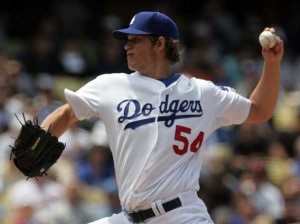
    Mavericks pitcher Clayton Kershaw

    We have reached the final two teams in this journey up the projected 2013 DTBL standings.  The two teams that remain are not huge surprises.  Although neither of them came out on top last year (they tied for second), an argument could be made that they were the best two teams in the league as the season ended.  The Mavericks may have won the league had they not run out of free agent signings, which caused them to play a few players short in the last several weeks of the season.  Meanwhile, the Kings finally overcame their starting pitching problems which plagued them through the first half of the season.  By the end of the year, their pitching was as good as anyone’s.  Interestingly, these two teams may have helped each other claim these top spots in the projections with a trade they made during the first round of this year’s draft.  The Mavericks dealt one of their extra first basemen, Ike Davis, to the Kings for a first round pick.  The Mavericks used that pick to acquire another youngster, Manny Machado, to add to their impressive squad of blossoming stars.

    Coincidentally, the standings through the first two full days of the 2013 season closely mimic the projected final standings, with the top four spots in the exact same order.  So here are the top two teams in those projections.

    Kevin’s Kings

    Category – Projected Rank (2012 Rank)

    • Batting Average – 2nd (3rd)
    • Home Runs – 5th (1st)
    • Runs Batted In – 3rd (1st)
    • Runs Scored – 5th (2nd)
    • Stolen Bases – 6th (4th)
    • Earned Run Average – 7th (8th)
    • WHIP Ratio – 4th (8th)
    • Wins – 3rd (4th-T)
    • Saves – 4th (7th)
    • Strike Outs – 4th (2nd)
    • Total Batting Points – 3rd (1st)
    • Total Pitching Points – 3rd (7th-T)
    • Total Points – 2nd (2nd-T)

    Summary:

    The Kings had the best offense in the league last year, partly due to their incredible depth.  For example, they were so strong in the middle infield that they routinely used their DH slot there, and yet Danny Espinosa barely made the major league roster all season.  Espinosa was a first round pick this year.  Their middle infield is still a huge strength with Robinson Cano, Jose Reyes and Ian Desmond.  They essentially have the same roster of hitters as last year since they used draft picks to reacquire Michael Morse and Jonathan LuCroy.  So this should be a very strong hitting team again.  The questions come on the mound.  These projections have the Kings moving up to third in pitching points, which would be a significant improvement.  Their pitching will likely go as the Tigers go since 3/5th of their rotation is identical to Detroit’s (Justin Verlander, Max Scherzer, Anibal Sanchez).  If Scherzer can continue to build on his great second half of ’12, this team will be in good shape.  The bullpen appears to be stronger now with three closers after going through most of last season with just two.  This is the 10th anniversary of the Kings last championship.  Perhaps this will be the year they become the league’s first five time champion.

    Marc’s Mavericks

    Category – Projected Rank (2012 Rank)

    • Batting Average – 8th (8th)
    • Home Runs – 1st (2nd)
    • Runs Batted In – 1st (2nd)
    • Runs Scored – 1st (1st)
    • Stolen Bases – 5th (1st)
    • Earned Run Average – 1st (6th)
    • WHIP Ratio – 2nd (5th)
    • Wins – 4th (4th-T)
    • Saves – 9th (8th)
    • Strike Outs – 1st (3rd)
    • Total Batting Points – 1st (2nd)
    • Total Pitching Points – 1st (6th)
    • Total Points – 1st (2nd-T)

    Summary:

    As it turns out, the Mavericks are on top of the projected standings by a fairly wide margin.  They lead the way in batting points, pitching points, and obviously total points, ten points clear of the Kings.  I’m not particularly surprised by this result, because as I mentioned up top, this was probably the best team in the league at the end of last season.  It will be interesting to see if those pitching projections pan out.  If they do, the Mavs will win this league.  Clayton Kershaw and Stephen Strasburg are probably among the best three or four pitchers in the league.  The rest of their rotation is loaded with potential, but is somewhat unproven.  The bullpen is really the only weakness of the entire team, but only because it lacks well entrenched closers.  The offense can be summed up in two words:  Mike Trout.  If he even comes close to matching his ridiculous 2012 campaign, the Mavericks will probably lead the league in batting points.  But he has plenty of help.  Jason Heyward, Adam Jones, Edwin Encarnacion and Matt Wieters will look to build upon their breakout seasons.  Will one of their other young guys take it to the next level this year?  There are too many candidates to name.  By no means are they a lock though.  Young talent is often unpredictable.  If a bunch of these guys fail to meet expectations this season, there will be a whole slew of other teams breathing down their necks.  But I think it is fair to say the Mavericks are the 2013 title favorites.

    Here is a look at the projected standings, with team totals in each category.  If you are wondering why the counting categories have decimal values, please go back to Part I of these previews where I explained my methodology.  Let me know if you would like me to share the full Google Doc with you so you can see the individual player projections as well.  Also, I apologize if the following table doesn’t look right.  This is my first attempt at embedding a Google Doc within a WordPress blog entry.  Hope it turns out!

  • 2013 Season Preview: Part III

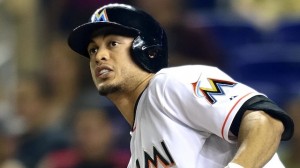
    Jackalope outfielder Giancarlo Stanton

    Every MLB team has a game in the books now.  I don’t think we have learned anything we didn’t already know.  Good pitching tends to beat good hitting.  Pitchers usually have the edge early in the season, especially on the first couple days when the aces are on the hill.  Also, Clayton Kershaw and Bryce Harper are pretty good.  And as I’m writing this, some guy name Marwin Gonzalez just ended Yu Darvish’s perfect game bid with two outs in the bottom of the 9th.  Still, a decent Demigods debut for Mr. Darvish.

    Now we’re getting to the heart of these 2013 season projections.  The top four contains the defending champions and three other teams that came within an eyelash of winning it all last year.  All four of these teams are likely to be in the hunt again this season.  Tonight, we’ll take a look at the teams projected to finish fourth and third place.  They happen to be the league’s last two champions.

    Nick’s Naturals

    Category – Projected Rank (2012 Rank)

    • Batting Average – 1st (4th)
    • Home Runs – 8th (4th)
    • Runs Batted In – 6th (5th)
    • Runs Scored – 3rd (4th)
    • Stolen Bases – 9th (9th)
    • Earned Run Average – 2nd (1st)
    • WHIP Ratio – 1st (2nd)
    • Wins – 10th (3rd)
    • Saves – 5th (2nd-T)
    • Strike Outs – 7th (5th)
    • Total Batting Points – 4th-T (5th)
    • Total Pitching Points – 4th (2nd)
    • Total Points – 4th (1st)

    Summary:

    I hate to beat a dead horse, but here is yet another example of a team that should easily beat their projections in at least a couple categories, particularly the nearly impossible category to predict:  wins.  I would be shocked if David Price winds up as the only Naturals pitcher with more than 13 wins, which is the case in these ZiPS projections.  Matt Cain, Jordan Zimmerman, Zack Greinke and Price are going to team up for the third fewest wins in the league?  I don’t think so.  Their staff led them to the championship last year and are a decent bet to do the same this year.  What will be more interesting to follow is the progress of their offense.  With the obvious exception of Miguel Cabrera, several of the Naturals other top hitters underachieved a year ago.  Joey Votto, Troy Tulowitzki and Justin Upton should cruise past their ’12 numbers.  Andrew McCutchen, a healthy Victor Martinez… this is a very impressive roster.  The Naturals hitting was the best in the league in 2011.  If they can combine their ’11 offense with their ’12 pitching, they will really be on to something.  And they certainly have the talent to do it.  Three teams better than this one?  We’ll see about that.

    Jay’s Jackalope

    Category – Projected Rank (2012 Rank)

    • Batting Average – 9th (9th)
    • Home Runs – 2nd (6th)
    • Runs Batted In – 2nd (6th)
    • Runs Scored – 2nd (7th)
    • Stolen Bases – 3rd-T (2nd)
    • Earned Run Average – 4th (3rd)
    • WHIP Ratio – 3rd (1st)
    • Wins – 8th (7th)
    • Saves – 8th (1st)
    • Strike Outs – 5th (1st)
    • Total Batting Points – 2nd (7th)
    • Total Pitching Points – 6th (1st)
    • Total Points – 3rd (5th)

    Summary:

    The Jackalope were unable to defend their title last year mostly because their offense was a huge disappointment.  These projections are encouraging for them in that it appears they should expect to bounce back near the top of the league in most hitting categories.  Only by Albert Pujols’ lofty standards would his ’12 season be considered a disappointment, but that it was.  Expect him to return to being one of the top fantasy players in the league.  Maybe not THE top player though.  That honor might belong to Jackalope teammate Ryan Braun.  Giancarlo Stanton is vying to join that discussion too, although it will be interesting to see how much he gets to hit with Placido Polanco hitting behind him for the Marlins.  The Jackalope have been carried by a nearly unbeatable rotation the last few years.  But they may not be quite as strong this year.  There are serious concerns about Roy Halladay’s rapidly decreasing velocity.  Felix Hernandez and Cliff Lee remain two of the most dependable pitchers in the game though.  One note on the Jackalope pitching projections.  They assumed Aroldis Chapman would be a starter this year.  It is debatable whether his return to the bullpen will be a net positive or negative for the Jackalope, but it certainly puts these rankings into question.  Regardless, the Jackalope have the hitting and pitching to compete for another title this year.

    That leaves two.  You know who they are now.  But you’ll have to wait until tomorrow to see who are the projected 2013 DTBL champions.

  • 2013 Season Preview: Part II

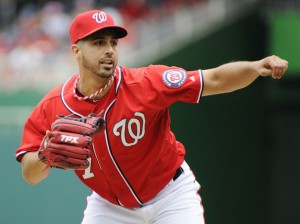
    Cougars pitcher Gio Gonzalez

    Last year concluded with a frantic five team race for the title on the final day of the season.  But just two months prior to that, there were as many as seven teams right in the hunt for the championship.  I’m not saying that will happen again this year, but there is precedent for all of the following teams to be championship contenders, even if they don’t significantly exceed their projections.  These are the teams that are projected to finish seventh up to fifth place.  Actually, the computed standings had two teams tied for sixth place, so I will just review them alphabetically.

    Charlie’s Thunder Choppers

    Category – Projected Rank (2012 Rank)

    • Batting Average – 10th (6th)
    • Home Runs – 3rd (3rd)
    • Runs Batted In – 7th (8th-T)
    • Runs Scored – 8th (6th)
    • Stolen Bases – 7th (6th)
    • Earned Run Average – 6th (7th)
    • WHIP Ratio – 10th (7th)
    • Wins – 5th (6th)
    • Saves – 2nd (5th-T)
    • Strike Outs – 3rd (4th)
    • Total Batting Points – 8th-T (6th)
    • Total Pitching Points – 5th (7th-T)
    • Total Points – 6th-T (6th)

    Summary:

    The Choppers are another team that could be expected to exceed their pitching projections.  For the second straight year, they might choose to use a sixth starting pitcher in a RP slot (Alexi Ogando).  Ogando isn’t likely to repeat Chris Sale’s ’12 season, but he could give the Choppers a nice win and strike out boost.  But they also have four closers on the roster, so they won’t be punting saves by any means.  Sale is their only elite starting pitcher, but they have a lot of intriguing guys who are capable of racking up strike outs, in particular.  On offense, it appears home runs will be their strength again this year.  Newcomer Anthony Rizzo will attempt to pick up the slack early on while Curtis Granderson is on the shelf.  Jose Bautista needs to stay healthy this year.  B.J. Upton appears to be primed for a huge season, in which case he could give the Choppers a boost in power and speed categories.  It has been a while since the Choppers were a serious title contender, but they will have a chance this year if their starting pitching pans out.

    Mike’s Moonshiners

    Category – Projected Rank (2012 Rank)

    • Batting Average – 6th (1st)
    • Home Runs – 6th (7th)
    • Runs Batted In – 4th (3rd)
    • Runs Scored – 4th (3rd)
    • Stolen Bases – 8th (5th)
    • Earned Run Average – 5th (2nd)
    • WHIP Ratio – 6th (6th)
    • Wins –  7th (2nd)
    • Saves – 7th (4th)
    • Strike Outs – 8th (8th)
    • Total Batting Points – 6th (3rd)
    • Total Pitching Points – 8th-T (3rd)
    • Total Points – 6th-T (4th)

    Summary:

    And here we have our first appearance from one of the “Big 5” who chased the title on the final day of the season.  This might be the most surprising projection of all.  Let’s not forget that the Moonshiners came within 1 1/2 points of winning the title last year and were the league’s most balanced team.  They were the only team to accumulate over 30 batting and pitching points.  So why the gloomy forecast for this season?  Well, they only had one draft pick in the first three rounds this year, so they didn’t have an opportunity to significantly pad their projections with one or two acquisitions.  But that doesn’t mean this team won’t contend.  The biggest key is for R.A. Dickey to not take an enormous step backwards like he is projected to do.  Dickey, Jered Weaver and Yovani Gallardo lead the rotation that will be a bit thin until Brandon Beachy returns from Tommy John surgery.  The bullpen only has two definite closers, but first round pick Fernando Rodney is good enough to make sure they aren’t buried in saves.  They have solid players across the board on offense, so I just don’t see them finishing in the bottom half of the league in batting points.  Prince Fielder, David Wright and Desmond Jennings are three players who I expect to easily exceed their projected numbers.  I strongly believe the Moonshiners will contend for their first DTBL title again this year.

    Kelly’s Cougars

    Category – Projected Rank (2012 Rank)

    • Batting Average – 7th (10th)
    • Home Runs – 4th (9th)
    • Runs Batted In – 5th (8th-T)
    • Runs Scored – 9th (9th)
    • Stolen Bases – 10th (3rd)
    • Earned Run Average – 3rd (5th)
    • WHIP Ratio – 5th (4th)
    • Wins –  1st (1st)
    • Saves – 6th (9th)
    • Strike Outs – 6th (7th)
    • Total Batting Points – 8th-T (9th)
    • Total Pitching Points – 2nd (5th)
    • Total Points – 5th (8th)

    Summary:

    Now here is a real sleeper candidate.  The Cougars have not finished in the top half of the league since 2004.  But this definitely looks like a team that is capable of making a big leap forward.  The most interesting thing in these projections is the Cougars shift from a speed to a power team.  In light of some spring training injuries, I think fourth in home runs is a little unrealistic, but they certainly do have more power on the roster.  They will need to overcome early injuries to Mark Teixeira and Brett Lawrie though.  Assuming he isn’t out too long, expect a big bounce-back season from Lawrie to help justify his status as the #1 pick in last year’s draft.  The pitching staff is very good.  I don’t think it is possible for Kris Medlen to repeat his performance as a starter last year, but he won’t need to.  Gio Gonzalez, Madison Bumgarner and Adam Wainwright join Medlen as four legitimate aces.  5th place may seem like an awfully optimistic prediction for this team, but I think it is quite possible they will finally make their return to the top half of the standings.

    I didn’t get around to doing any previews yesterday, so I’m a day behind schedule.  My new goal is two more teams tomorrow (Tuesday) and then the top two championship contenders (according to the projections) on Wednesday.  I hope you are enjoying the first full day of baseball!

  • 2013 Season Preview: Part I

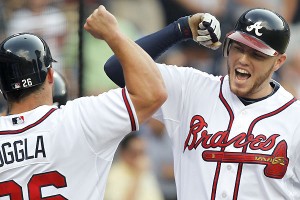
    Demigods first baseman Freddie Freeman

    Last year, Marc provided some very interesting team previews based on stats from multiple projection systems.  I have decided to do something similar this year, however, due to time constraints, I only used a single set of projections:  ZiPS.  I’m not an expert on these different projection models, so I have no idea if ZiPS was the best choice, but that’s what I went with.  ZiPS does not do saves projections (or if they do, it isn’t available on FanGraphs), so I used Steamer Projections for that category only.  I could write a very lengthy article on why these stat projections aren’t the greatest for predicting fantasy results, so take all of these projections with several grains of salt.  However, I also don’t like to make enemies by publishing my own predictions, so I’ll let the numbers do the talking.

    Here is a brief explanation of my methodology.  I used the projections for all 28 players on each team’s roster to compute team totals in all 10 of the categories we use.  However, I didn’t want to leave it at that since there are a bunch of differences in the composition of the extra five players on each roster.  For example, it would figure that teams with a bench full of hitters would outpace teams with mostly extra pitchers in the offensive counting categories (HR, RBI, R, SB).  So what I decided to do was to multiply the team totals in those four categories by the ratio of 14 over the total number of offensive players on the roster.  Theoretically, this would mean I’m only counting full season stats for 14 players, the regular DTBL batting roster size.  I did this rather than simply subtracting players who figure to spend part/most of the season on the bench because I didn’t want to make any personal predictions on roster moves.  The biggest flaw in doing it this way is that every player contributes to the team projections, even if they aren’t expected to see much playing time.  But I think this is better than adding full season projections for every single player.

    My methodology was slightly different for pitchers.  Doing it the same way as I did for hitters would have been slightly problematic because it would cause significant differences between teams with extra starting pitchers vs. teams with only extra relievers.  So instead, I calculated what the average number of innings pitched was for each DTBL team in 2012 (1,239) and assumed each team would come close to that number again this year.  So the ratio used to multiply the counting categories (W, SV, K) was 1,239 divided by the team’s projected innings total.  The biggest flaw here is with teams that plan on using an extra starting pitcher in a RP slot.  It is safe to assume those teams will accumulate more innings, but these projections assume the team IP totals are all the same.  So that is another caveat to consider when diagnosing your team’s projections.

    Despite the flaws, I do believe these projections can be useful in identifying relative strengths and weaknesses of each team.  Perhaps I will share the full projections when I finish with the team previews.  In these previews, I will provide the team’s projected ranking in each category as well as the overall predicted order of finish.  Then I will give some of my own thoughts about the team, and perhaps explain some instances where I feel the projections are wrong.  I will go in the reverse order of the predicted standings, doing a few teams each day for the next few days.  So, without further ado, here is the team projected to finish in last place…

    Greg’s Gators

    Category – Projected Rank (2012 Rank)

    • Batting Average – 4th (7th)
    • Home Runs – 10th (10th)
    • Runs Batted In – 10th (10th)
    • Runs Scored – 10th (10th)
    • Stolen Bases – 2nd (10th)
    • Earned Run Average – 10th (4th)
    • WHIP Ratio – 7th (3rd)
    • Wins – 6th (9th)
    • Saves – 1st (2nd-T)
    • Strike Outs – 9th (6th)
    • Total Batting Points – 10th (10th)
    • Total Pitching Points – 8th-T (4th)
    • Total Points – 10th (9th)

    Summary:

    Obviously, nobody wants to be last in a projection.  However, despite the 10th place prediction, there are encouraging signs for the Gators.  First, they just completed their best draft in many years, acquiring some very good, young talent with players like Yoenis Cespedes, Will Middlebrooks and Andrelton Simmons.  Next, they are projected to finish with 41 points, which would be an improvement over last season.  They have had the worst offense in the league three years running, but there is a decent chance that streak will stop this year.  Almost all of the offensive players they drafted this year will be upgrades over their counterparts from 2012.  The pitching projections are a little surprising because the Gators had a very underrated staff a year ago.  They still have the deepest stable of closers in the league.  Their rotation is a big question mark, but there is potential to meet or exceed last year’s numbers.  I think this will be a much improved Gators squad, even if the place of finish doesn’t necessarily reflect that.

    Dom’s Demigods

    Category – Projected Rank (2012 Rank)

    • Batting Average – 3rd (2nd)
    • Home Runs – 9th (5th)
    • Runs Batted In – 8th (4th)
    • Runs Scored – 6th (5th)
    • Stolen Bases – 1st (7th)
    • Earned Run Average – 9th (9th)
    • WHIP Ratio – 8th (9th)
    • Wins – 2nd (8th)
    • Saves – 10th (5th-T)
    • Strike Outs – 10th (9th)
    • Total Batting Points – 4th-T (4th)
    • Total Pitching Points – 10th (9th)
    • Total Points – 9th (7th)

    Summary:

    Last year, the Demigods championship hopes were sabotaged by a weak pitching staff.  If these projections are to be believed, that could be the case again this year.  However, this is one team where my methodology for computing the pitching stats was harmful because it appears they will use a sixth starting pitcher (Brett Myers), meaning their wins and strike out totals should be higher than projected.  Cole Hamels, Yu Darvish and Johnny Cueto form a pretty solid top three, but the rest of the staff will need to exceed expectations.  They only have one closer, Brandon League, who could lose his job any minute.  So saves appears to be a write off category.  Offensively, the Demigods have a solid squad, but they need to stay a lot healthier than they did last year.  Look for huge seasons out of Matt Kemp, Evan Longoria and Buster Posey.  Freddie Freeman is a major breakout candidate too.  9th place would be a pretty big disappointment considering how much talent is on this roster.

    David’s Darkhorses

    Category – Projected Rank (2012 Rank)

    • Batting Average – 5th (5th)
    • Home Runs – 7th (8th)
    • Runs Batted In – 9th (7th)
    • Runs Scored – 7th (8th)
    • Stolen Bases – 3rd-T (8th)
    • Earned Run Average – 8th (10th)
    • WHIP Ratio – 9th (10th)
    • Wins – 9th (10th)
    • Saves – 3rd (10th)
    • Strike Outs – 2nd (10th)
    • Total Batting Points – 7th (8th)
    • Total Pitching Points – 7th (10th)
    • Total Points – 8th (10th)

    Summary:

    It has been two long years since the Darkhorses 4-peat.  Last year in particular, was one long nightmare in which everything that could have possibly gone wrong did.  They nearly set the low water mark for total points and finished dead last in all five pitching categories.  There is no way to go but up from there.  And this team is a safe bet to do just that.  But the injuries are already starting to mount up, starting with the news that Chris Carpenter may never pitch again, which came out not long after our roster cuts were made.  Relief pitchers Ryan Madson and Jonny Venters are also headed to the DL to start the year.  And on offense, Brian McCann and Hanley Ramirez will miss significant time to begin the season.  Their healthy pitchers are mostly high strike out guys who hope to improve their ERA and WHIP numbers.  A strong comeback year for Tim Lincecum would go a long way towards fixing this team.  I’m not sure what to think about the Darkhorses offense, but we saw last year how quickly one young superstar can turn around an entire squad (Mike Trout, Mavericks).  The Darkhorses hope to get a similar boost from Bryce Harper.  He just may be up to the task.  Hopefully, these early injuries won’t bury the Darkhorses before they ever get started, but I think they will certainly improve upon last year’s disaster.

    That’s it for tonight.  Tomorrow, I’ll run down at least three more teams and finish things up on Monday and Tuesday.

    Enjoy tomorrow night’s MLB opener and have a happy Easter!

  • No Clowning Around

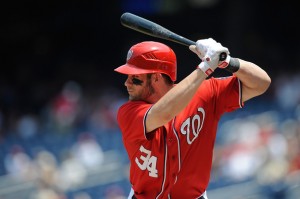
    Darkhorses outfielder Bryce Harper

    Who should the Darkhorses have picked with the first selection in the 2013 DTBL Draft?  That’s a clown question, bro.  With one of the clearest cut decisions in recent memory, the Darkhorses selected 20 year old outfielder Bryce Harper.  The Nationals young phenom burst onto the scene last summer at the ripe age of 19 and proceeded to win the National League Rookie of the Year award.  He bounced back from a mid-summer slump to tear the league apart on his way to a .270 average with 22 home runs and 18 stolen bases.  The home run total was the second most by a teenager in MLB history.

    A year after most of the league made the mistake of allowing Mike Trout to slip to the second round, the Darkhorses ensured that the same wouldn’t happen this time around.  Of course, Harper has much higher expectations heading into this season than Trout did a year ago since he has a roster spot locked up and is even expected to hit third in the lineup for one of the top World Series contenders.  Although both are legitimate five tool players, Harper does have a slightly different skill set than Trout.  Harper is projected to be the bigger power threat while Trout has unmatched speed on the bases and in the outfield.  The sky is the limit for Harper, and his bust potential seems extremely low.

    Harper is only the second player to become a first overall selection in both the MLB and DTBL drafts.  Alex Rodriguez is the other, which makes it interesting that Harper is entering the league at the exact same time as ARod’s 16 year career with the Kings is coming to an end.  I’m sure the Darkhorses would be happy to get at least a decade and a half of service out of Harper.  I’m 99% positive that Harper was the youngest player to ever be drafted by a DTBL team in the first round (maybe any round), an honor he held for less than 24 hours (more on that later).  The Darkhorses are looking to bounce back from two straight disappointing, injury-riddled seasons.  Harper has the potential to quickly accelerate the rebuilding process, much like Trout did for the Mavericks a year ago.

    Last year, the Gators had the tall order of trying to rebuild without the benefit of a first or second round pick.  This year, they held onto those picks and wisely used them to pick up a few of the best young players in the draft.  With the second overall pick, they selected Cuban outfielder Yoenis Cespedes who made an immediate impact in his first big league season, hitting several prodigious home runs early in the season.  He somewhat quietly proceeded to have an outstanding season that surely would have earned him a Rookie of the Year nod if it weren’t for some guy named Trout.  Cespedes slugged 23 home runs with 82 RBI and 16 steals.  Like Harper, he has big time power potential with the ability to add a bunch of stolen bases too.

    If Kris Medlen can come anywhere close to matching his 2012 numbers, the Cougars might suddenly have one of the league’s top pitching staffs.  Medlen, a Tommy John surgery survivor, started last season in the bullpen, but then became nearly unhittable after moving into the rotation.  He won 10 games with a miniscule 1.57 ERA and a sub 1.00 WHIP.  The Cougars selected him with the third pick in the draft.  The Demigods then followed with another starting pitcher, Yu Darvish.  Along with Cespedes, Darvish was the other key foreign import to the big leagues last season.  He displayed overpowering stuff, striking out 221 hitters in just 190 innings.  He should help the Demigods recover from a season that was largely derailed by a shaky pitching staff.  The Choppers took the Cubs young first baseman, Anthony Rizzo, with the fifth pick.  Rizzo had been a highly touted prospect for a number of years, before finally breaking through with a solid season for his third MLB organization.  Rizzo figures to be a centerpiece in the Cubs lineup for some time to come.

    For the most part, the top five picks were fairly clear cut.  I know those five players were the top five on my draft board, and I suspect I’m not alone.  But I felt there was a significant drop-off in available talent after those five.  Which was kind of fitting because the next five teams all came within an eyelash of winning the championship last year anyway.

    For the second straight year, the Jackalope were the first team to select a non-DTBL rookie.  With the sixth pick, they took second baseman Danny Espinosa, who spent the last two seasons with the Kings.  Espinosa spent almost the entire ’12 season on the Kings bench, but only because he was at a log jammed position.  He actually had a very solid year and provides significant power and speed for a middle infielder.  He seems to be getting better each year too.  Next, the Moonshiners selected closer Fernando Rodney, the obvious #1 relief pitcher on the board.  Rodney re-emerged as an elite closer for the Rays, saving 48 games with a ridiculous 0.60 ERA.  Seventh is the earliest a relief pitcher has been selected since 2010.  But the Moonshiners were in desperate need of a second closer and only had two picks in the first rounds with which to acquire one.

    For the fourth straight years, the Mavericks had multiple first round picks.  This time, they didn’t acquire the second one until just before they were on the clock with the eighth pick.  They dealt one member of their stable of first basemen, Ike Davis, to the Kings for the ninth overall pick.  So with two consecutive picks, the Mavericks did what has become their trademark:  they selected two young prospects, second baseman Jurickson Profar and third baseman Manny Machado.  Both have big upside, but Machado figures to make a more immediate impact since Profar is temporarily without a position in Texas, behind Elvis Andrus and Ian Kinsler.  Of course, this is a similar situation that Mike Trout was in a year ago.  Profar just turned 20 a few weeks ago, which is notable for a couple reasons.  First, I believe it makes him the youngest player in DTBL history (he’s a few months younger than Harper).  Next, he is the first DTBL player to have been born after the inaugural DTBL Draft in January of 1993.  So he’s actually younger than this league!  (Damn, we’re getting old)

    For the second straight year, the Kings used the first round to try to fill their gaping hole at first base.  But this time, they did so by trading their pick for Ike Davis.  Davis got off to a horrific start in 2012, due in part to his slow recovery from valley fever, which he contracted during spring training.  But he rebounded in the second half of the season and turned into one of the leading home run hitters after the break.  He finished the season with 32 bombs.  Finally, the Naturals used the last pick of the first round to re-acquire catcher Victor Martinez.  Martinez missed all of last season recovering from a torn ACL suffered over the previous winter.  The Naturals were clearly reluctant to let him go after holding him on the roster for the entire season.  However, when the opportunity came to pick him up again, they jumped all over it.  Although his catching days may be over, he will likely produce stellar numbers at a position that is extremely difficult to fill.

    For the most part, there were few surprises in the first round.  And I honestly can’t criticize any of the picks.  The top five teams went with the best players available, while the second half of the round featured last year’s contenders fill holes and/or proceed with their successful draft strategies.

    The pace of the draft has been great so far too.  We’re already into the fifth round at the four day mark, so I’d say we are well ahead of schedule.  Keep up the good work!

  • My American Dream Team

    The 2013 World Baseball Classic began in Southeast Asia this past weekend.  The North American pools begin play tomorrow.  I’m a sucker for pretty much any international athletic competition, and baseball is my favorite sport, so it would seem only natural that I would be excited about the WBC.  But that’s not quite the case.  I will certainly watch it, but I will do so knowing that this is not the ideal way of crowning a true World Champion.

    The flaws of the WBC are many, but #1 on the list for me is that a majority of the sport’s best players will not be participating, particularly those who could be representing the United States.  I don’t blame any of the individual players for not participating and I’m not sure there is anything MLB or the tournament organizers could do to change this, but it certainly hurts the tournament.

    Team USA suffered a blow yesterday when they lost their presumed starting first baseman, Mark Teixeira, to a wrist injury.  He was replaced on the roster by Eric Hosmer.  Due to the last minute nature of Teixeira’s injury, I realize the options were probably quite limited in finding a replacement.  But if I were to compile a list of the top 10 American first basemen, I’m not sure Hosmer would make that list.  Meanwhile, a player who probably would rank ahead of him, Anthony Rizzo, is competing for Team Italy.  Don’t get me started on the ridiculousness of that…  But the point is, Team USA is clearly not as strong as they could be.  I decided to take a crack at compiling my ideal roster for the USA.  This team would be prohibitive favorites to win the competition, rather than just one of several countries with a decent shot at it.

    Players who are actually on the USA’s WBC roster are italicized.

    My starting lineup:

    1.  Mike Trout, RF

    2.  Andrew McCutchen, CF

    3.  Ryan Braun, LF

    4.  Prince Fielder, 1B

    5.  Giancarlo Stanton, DH

    6.  David Wright, 3B

    7.  Troy Tulowitzki, SS

    8.  Buster Posey, C

    9.  Dustin Pedroia, 2B

    Reserves:

    Catchers – Joe Mauer

    Infielders – Evan Longoria, Ben Zobrist (just so I have someone who can back up any position)

    Outfielders – Matt Kemp, Josh Hamilton

    Starting Pitchers:

    Justin Verlander, Clayton Kershaw, Stephen Strasburg, David Price

    Bullpen (I’ll use a couple regular SPs out of the pen):

    Craig Kimbrel, Jonathan Papelbon, Jason Motte, J.J. Putz, Matt Cain, Chris Sale, Glen Perkins, Tyler Clippard, David Hernandez, Jonny Venters

    No other country could come close to putting together a roster with that sort of depth.  Not that it would guarantee victory in a tournament with so few games, but I’d take my chances with this squad.  Only eight of my choices are on the actual team, and none of them are starting pitchers.  No offense to Ross Detwiler, Ryan Vogelsong and Derek Holland, but they are quite a drop off from the rotation I compiled.

  • Happy 20th Anniversary!

    20 years ago today, January 18, 1993, five kids met in a basement to try out this thing called fantasy baseball.  Of course, I, and some of you, were those kids.  The league didn’t even have a name yet, but with the kick-off of the inaugural league draft that day, the Dream Team Baseball League was officially launched.  Two decades later, here we are still taking part in what has to be one of the longest running fantasy baseball leagues to have been started by a bunch of junior high kids.

    Sometime soon, I need to put all of the early history of the DTBL in writing before it completely escapes my memory.  But for today, I’ll just write about some of what I recall from that inaugural draft.  It will be a quick trip down memory lane for some of you, and for the rest, you may learn a little bit about how this whole thing got started.  That first draft was extremely significant not just because it was the beginning of the league, but because one team used it to build the league’s first dynasty.

    It was Martin Luther King Day 1993.  Current DTBL members Kelly, Charlie, Greg and myself, along with former member Peter, gathered in my family’s basement.  It was the last day of a three day weekend.  Four of us were in seventh grade and one in sixth at the time.  My youngest sister, who is currently a sophomore in college, was born three weeks after the draft.  Obviously, we all had a keen interest in baseball, but I don’t think any of us knew exactly what we were getting ourselves into.  We had certainly never played fantasy baseball before, and I think only I had even heard of it.  But I explained to the others what I had learned from reading about the game, established some rules, and organized the draft.

    In preparation for the draft, I attempted to set up the basement to mimic the NFL draft rooms I had seen on TV.  Each person had a table/desk with a team placard to mark their spot.  There was a makeshift podium from which the teams announced their selections.  When picks were made, the selected player’s baseball card was taped onto the wall next to a team pennant:  a draft board, of sorts.  I had printed out “newsletters” for each owner, containing the list of eligible players and stats.  As I type this, I’m staring at my old copy of that original newsletter.  Reading through it, some of it is quite embarrassing, until I remind myself I was 13 years old when I wrote these things.

    Although I don’t remember how long the draft ran, it could not have been short.  It lasted 28 rounds, allowing each team to fill their entire roster.  Our naivety towards fantasy baseball was evident right from the start.  The first round was filled with picks of personal favorites (Choppers:  Greg Maddux, Kings:  Frank Thomas) and past-their-prime stars (Gators:  Kirby Puckett, Cougars:  Joe Carter).  We drew numbers to determine the draft order, but wisely used a serpentine draft order for the only time in league history.  Greg selected Puckett with the first pick, effectively making him the league’s first official player.  Maddux went second, Ken Griffey Jr. third (to the Panthers), Thomas fourth and Carter fifth.

    Joe Carter may have been a questionable choice by the Cougars in the first round (although he was the World Series hero that year), but the totality of their 1993 draft was the best dynasty building event this league has ever seen.  They heisted Barry Bonds in the fourth (!!!) round.  Yes, this was pre-steroids Bonds, but he was already well established as one of the best players in baseball, and especially in fantasy baseball, coming off a 34 HR, 39 SB ’92 season.  Their next pick after Bonds was quite a steal as well:  Albert Belle.  Then came Barry Larkin in round six.  But they weren’t done drafting potential future Hall of Famers.  In round 18 it was Craig Biggio, Ivan Rodriguez in 19 and Kenny Lofton in the 22nd round.  Though Kelly was the youngest one in the group, she certainly outsmarted the rest of us that day.  The end result of that super draft class?  Three titles in the league’s first four years.  This season will also be the 20th anniversary of the Cougars’ 1993 title.

    As we progress through 2013, I may have some more 20th anniversary features, but I figured it would be nice to take a quick stroll down memory lane on this milestone date.  Looking ahead to our 2013 season, roster cuts will be due soon.  I will send details in an email.

    Happy Anniversary!

  • Cabrera Crowned MVP

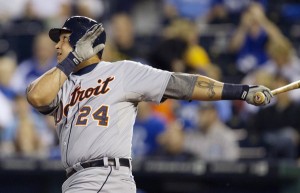
    Naturals first baseman Miguel Cabrera

    Since the World Series ended a few weeks ago, the biggest debate in baseball has been Miguel Cabrera vs. Mike Trout, who should be the American League MVP?  It’s been dubbed “Old School” vs. “New School” in terms of player evaluation.  “Old School” being traditional statistics like batting average, home runs and RBI and “New School” methodology using stats like WAR, OPS+ and UZR.  This isn’t the first time this debate has popped up.  Statheads claimed victory in 2010 when Felix Hernandez won the AL Cy Young award despite only recording 13 wins that season, a total which many believe would have disqualified him in years past.

    So this year we have Cabrera, who led the league in those traditional batting stat categories, thus earning him the first Triple Crown in 45 years.  And then we have Trout, whose base running and defensive prowess helped him put together what the advanced metrics would tell us was the greatest non-Barry Bonds steroid-aided season in at least 20 years.  The debate for DTBL MVP was similar, except in fantasy baseball, we don’t care about defense.  Nonetheless, the same two players figured to be the top contenders for the award.  In the end, and quite surprisingly to yours truly, Miguel Cabrera wound up winning both awards in fairly comfortable fashion.  He is the 2012 DTBL Most Valuable Player.

    The Naturals path to the DTBL Championship has been well documented by now.  But Cabrera’s contribution to that title cannot be overstated.  The Naturals offense took some huge blows, dating back to last winter when Victor Martinez tore his ACL, causing him to miss the entire 2012 season.  It continued throughout the year when they lost several other key players to injuries, most notably Troy Tulowitzki.  However, the offense was just good enough to keep them in the race, almost entirely thanks to Cabrera.  He hit .330 with 44 home runs, 139 RBI and 109 runs scored.  He led the DTBL in HR and RBI, but did not win the Triple Crown in this league, finishing fourth in batting average.  Only Trout scored more runs than him, so Cabrera finished in the top four of every offensive category except stolen bases.  Needless to say, he led the Naturals in all four of those categories as well, with only Andrew McCutchen even coming close to him in most of them.

    Cabrera was a first round selection of the Naturals back in 2004 and won the DTBL Rookie of the Year award that season.  He has now won three DTBL titles.  Carl Crawford is the only other player who has contributed to all three of the Naturals championships, though Crawford’s contributions were quite limited this year.  Cabrera has bounced around at three different positions for the Naturals (OF, 3B, 1B), but his hitting has remained consistently solid.  Albert Pujols is probably the only other player who has consistently produced at such a high level for almost a full decade now.  This is his first DTBL MVP award though.  Cabrera has an incredible .321 career average.  He passed the 300 home run milestone late in this season (now has 309 in his DTBL career).  He also surpassed the 1,000 RBI mark this year too.  He is the Naturals’ franchise record holder in every offensive category except stolen bases.  Having played almost entirely at third base this year, next year he will shift back to 3B in the DTBL as well, creating some exciting possibilities for the Naturals.

    So that brings us to Trout.  The DTBL Rookie of the Year easily could have won this award too.  He led the league in runs and stolen bases, and even edged out Cabrera in batting average in this league since the Mavericks missed out on his first few MLB games of the year.  Trout bested Cabrera in three of five fantasy categories.  Also, the Triple Crown wasn’t in play here either.  So how exactly did Cabrera win this award?  Well, one crucial tie-breaker could have been the fact that the Naturals finished one point ahead of the Mavericks, making them the league champions.  In extremely tight races, team success can certainly enter into the equation.  Personally, I think the Tigers making the playoffs and the Angels missing out was a poor reason to vote Cabrera over Trout in the AL race considering the Angels actually won more games than the Tigers.  But it is a totally justifiable reason to give the nod to Cabrera in this league.  Also, some may have decided that Rookie of the Year was enough of an honor for Trout this year.  Surely, there will be other MVP opportunities for him down the road.

    What surprised me was the way the DTBL (and AL) vote turned out.  Not only did Cabrera win, but it wasn’t really that close.  In fact, Trout was closer to finishing third than he was to winning the award.  Cabrera received seven first place votes, two seconds and one fourth for a total of 87 points.  Trout was only at the top of two ballots and received 66 points.  Jackalope outfielder Ryan Braun received a first place vote as well and finished just seven points behind Trout.  Braun was barely even in the NL MVP discussion, but that is almost certainly due to what many believed to be his tainted 2011 NL MVP award.  He had another terrific season but was bested by a pair of players who had historic years.  Cougars outfielder Josh Hamilton finished in fourth place and another Natural, Andrew McCutchen, finished fifth.  So second through fifth places were all occupied by outfielders.  NL MVP, and Demigods catcher, Buster Posey came in sixth.

    Click here to view the full MVP voting results.

    Before I wrap this up, I want to go back to the Cabrera/Trout debate and add some of my personal thoughts.  First of all, I have been amused/amazed by the fallout from yesterday’s announcement.  Some statheads are in complete bewilderment, thinking this result is a slap in their faces.  On the other hand, some “traditionalists” are using this opportunity to mock these people they view as “new-age nerds”.  I think both sets of people are acting ridiculously.  A vote for Cabrera OR Trout is completely justifiable.  They both had tremendous seasons.  Personally, I voted for Trout in this league and would have done the same if I had an AL MVP vote, but I completely understand Cabrera winning this award, and actually expected it.

    One thing people need to keep in mind is that there is no 100% foolproof way of judging a player’s value with statistics.  WAR (Wins Above Replacement) is probably the best metric at our disposal today to do that, but even WAR is flawed.  First of all, there isn’t even an agreed upon formula for calculating WAR.  The two most cited WAR producers (FanGraphs and Baseball Reference) use different formulas, and thus have different results.  Also, one major piece of the formula is defense.  While defensive stats are getting better every day, they still need to be taken with a grain of salt.  For example, am I supposed to believe Alfonso Soriano was the 12th most valuable defensive player in baseball this year?  That’s what FanGraph’s UZR rankings tell me.  Anybody who watched Trout and Cabrera play can tell you that Trout was a far, far superior defensive player.  However, judging exactly what the difference between the two players was, in terms of value to their teams, is nearly impossible.  Personally, I believe the defensive ratings for those two players are fairly accurate, but this is only my opinion and is very much open to debate.

    On to the rest of the post-season!  I still have one more season recap to write (covering the non-contenders), so look for that soon.  Then we’ll start focusing on 2013.  By the way, I am definitely implementing the suggested rule change to push back the roster cut deadline.  I haven’t set the official deadline yet, but it will probably be in early February.  You still will not be able to trade players until cuts have been made, so we are in a bit of a roster freeze period until the winter ends.  At the moment, this is the only rule change I have decided upon for next year, but that may change.  Further dialogue is encouraged.